Quiet horror works by making a small change matter. An empty room becomes interesting when viewers hear an unexplained movement beyond the frame. The effect depends on an established normal sound world. If the soundtrack begins at maximum intensity, a tiny clue has nothing to contrast with.
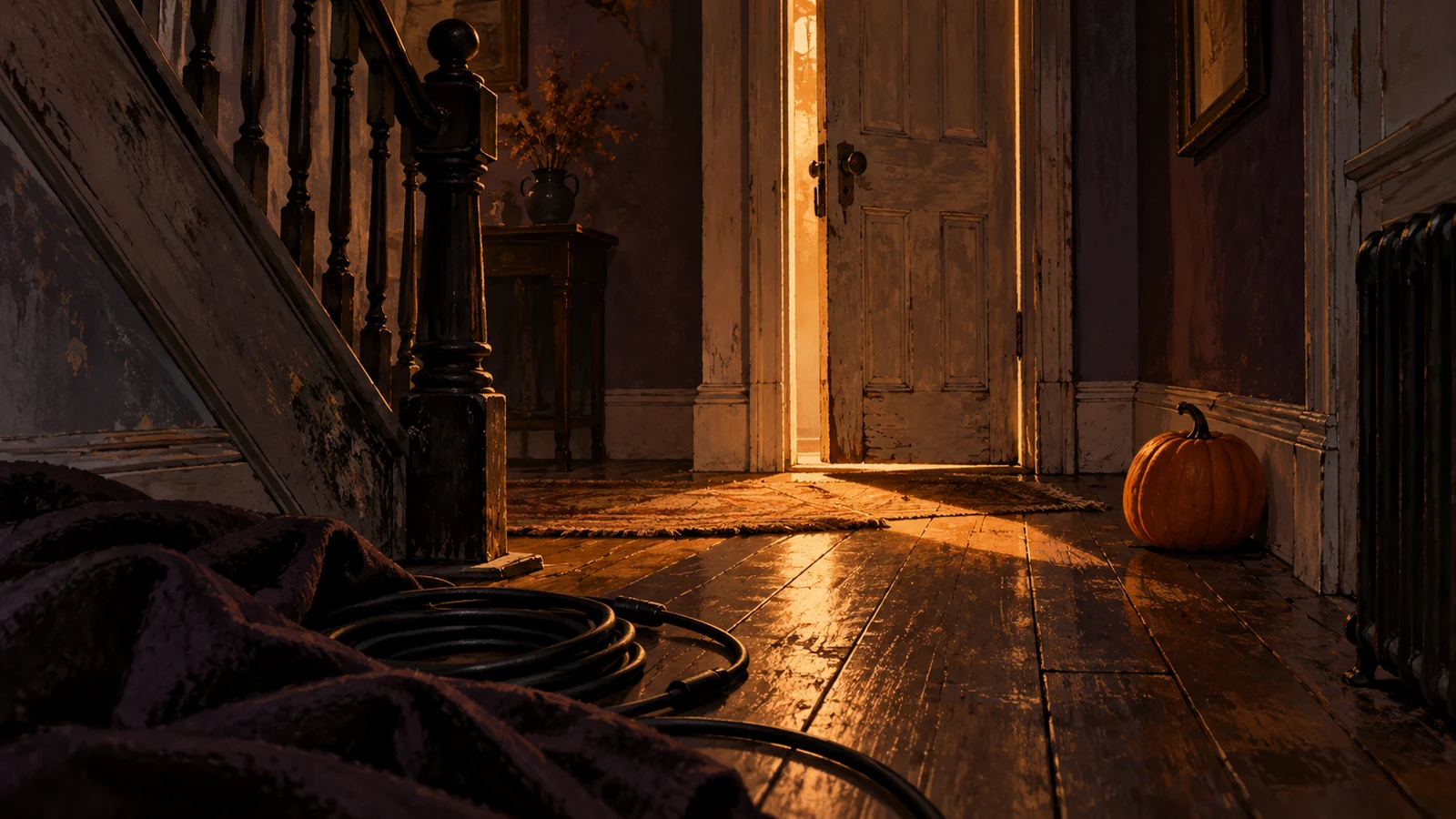
For a short fictional Halloween scene, build a believable place, reveal one uncertainty and let the viewer wait. This guide uses an ordinary room and a closed door as a worked example. The timings and story choices are editorial experiments, not rules about what every audience finds frightening.
Record a baseline before the scene
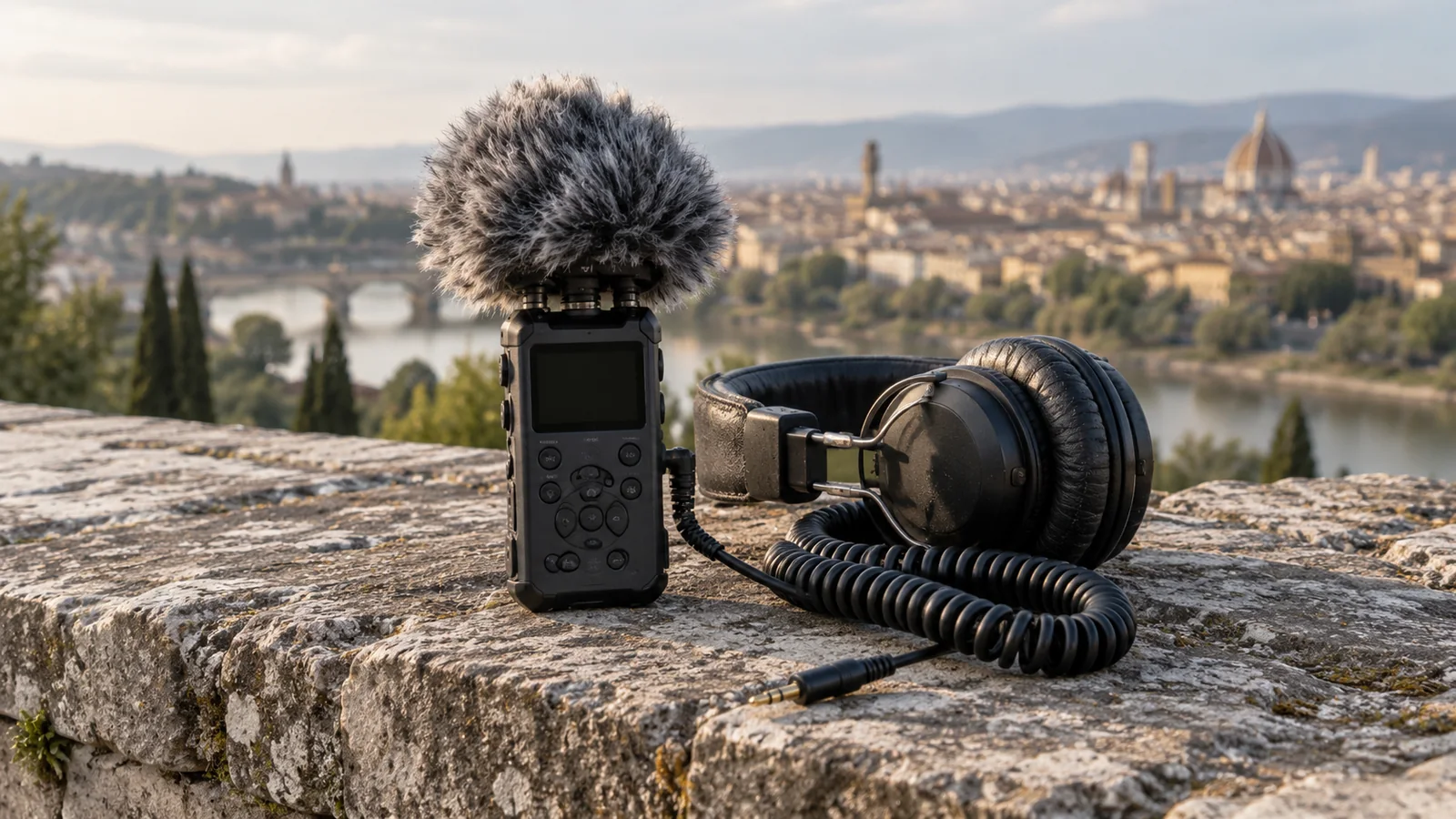
In your own location, record a steady stretch of background sound with the microphone and room arranged as they will be during the take. Avoid speech, handling noise and deliberate effects in that recording. It gives you material to bridge edits without suddenly changing the apparent room.
Listen before filming. A refrigerator, traffic sound or ventilation fan may become part of the scene's character. Decide whether it helps or distracts. Do not switch off equipment that needs to remain running for safety, and do not record strangers' private conversations to obtain interesting background detail.
Keep several separate recordings: room baseline, the door movement and a quiet step on the actual floor. Name them by location and action. You can then test a story change without digging through one long recording that contains unrelated events.
Design a sequence with one clue
Begin with a person working quietly at a desk. Hold long enough to establish a normal activity. Let a subtle scrape occur beyond the frame. The person looks toward the closed door; the room sound continues. The next shot shows the same door without immediately explaining the scrape.
The unanswered relationship between sound and picture carries the suspense. Adding footsteps, thunder, whispers and a dramatic chord simultaneously would introduce several competing explanations. Start with one clue and add another only if the viewer needs it to understand the story.
| Passage | Sound choice | Picture choice | What it establishes |
|---|---|---|---|
| Normal activity | Steady room baseline | Ordinary task held clearly | A believable starting condition |
| First interruption | One offscreen scrape | Reaction before explanation | A question about the source |
| Investigation | Room baseline with restrained movement | Door or empty space | Continued uncertainty |
| Ending | A small change or deliberate unresolved hold | New information or an unanswered image | The chosen payoff |
Choose whether the ending reveals a harmless cause, a fictional threat or no answer. That choice should be apparent in your brief before you spend time polishing textures.
Use near-silence carefully
Silence in an edit can mean no music, reduced environment or an actual absence of all sound. Test these separately. Removing every layer at once may sound like playback failed, especially when the room was previously steady. Leaving a faint environmental continuity can preserve the sense that the scene is still happening.
Compare two versions at the same comfortable playback volume. In one, lower the environment just before the door shot. In the other, keep it unchanged. Ask whether the difference adds uncertainty or merely makes the technical edit conspicuous. A small intentional change usually needs less explanation than an extreme one.
For repair at a room-tone join, use a brief overlap and listen for a seam. Audacity's fade and crossfade documentation explains fades as tools for smoothing transitions. A crossfade cannot rescue incompatible background recordings when a fan or traffic pattern changes substantially.
Keep music optional
Try the sequence with environmental recordings alone before introducing a score. If the picture already carries the uncertainty, music may only announce the intended reaction. If you add it, choose a sparse excerpt whose development does not resolve the story earlier than the image.
Disclosure: STIS is operated by Angry Media, TrackBrief's publisher. The seasonal STIS album linked below is a possible licensed music audition alongside an original texture or another library. Choose only what the scene needs; a successful quiet version can have no music at all.
STIS spooky season halloween sounds
Preserve access to the plot clue
Check headphones for edit clicks and a phone speaker for whether the relevant clue survives. Do not compensate for a subtle clue by making the final event uncomfortably loud. Change the recording or the visual emphasis instead.
Caption the meaningful scrape or knock accurately, using the approach described in W3C's caption guidance. Show a readable reaction or visual clue for viewers who watch without sound. The suspense should arise from controlled information, while the central question remains available across listening conditions.
For a wider discussion of deliberate pauses, read when silence makes a video stronger and apply the choice to your actual scene.