“Royalty-free” is not a complete answer. Before licensing music for a creator video, you need to know which work you are using, who may use it, where it may appear, how long the permission lasts, and what happens when a platform or client changes the plan. A track can be creatively perfect and still be wrong for an advertisement, a worldwide release, a paid campaign, a re-edit, or an AI-assisted workflow.
This article gives you exactly nine practical questions to ask before you pay, download, or publish. It is a production and record-keeping system, not legal advice. Contract language controls; platform libraries and licences change by account, region, product, and date. The official sources below were checked on 2026-09-15.
Build a rights record before you build the edit
Create one rights record per track and attach it to the project. Save the track title, artist, recording identifier if supplied, composition writers or publisher, licensor, purchase receipt, licence text, invoice, account used, date, territory, term, media, commercial status, allowed edits, attribution, Content ID procedure, and contact for claims. Keep a copy of the terms that applied when you licensed the music; a webpage or catalogue description may change later.
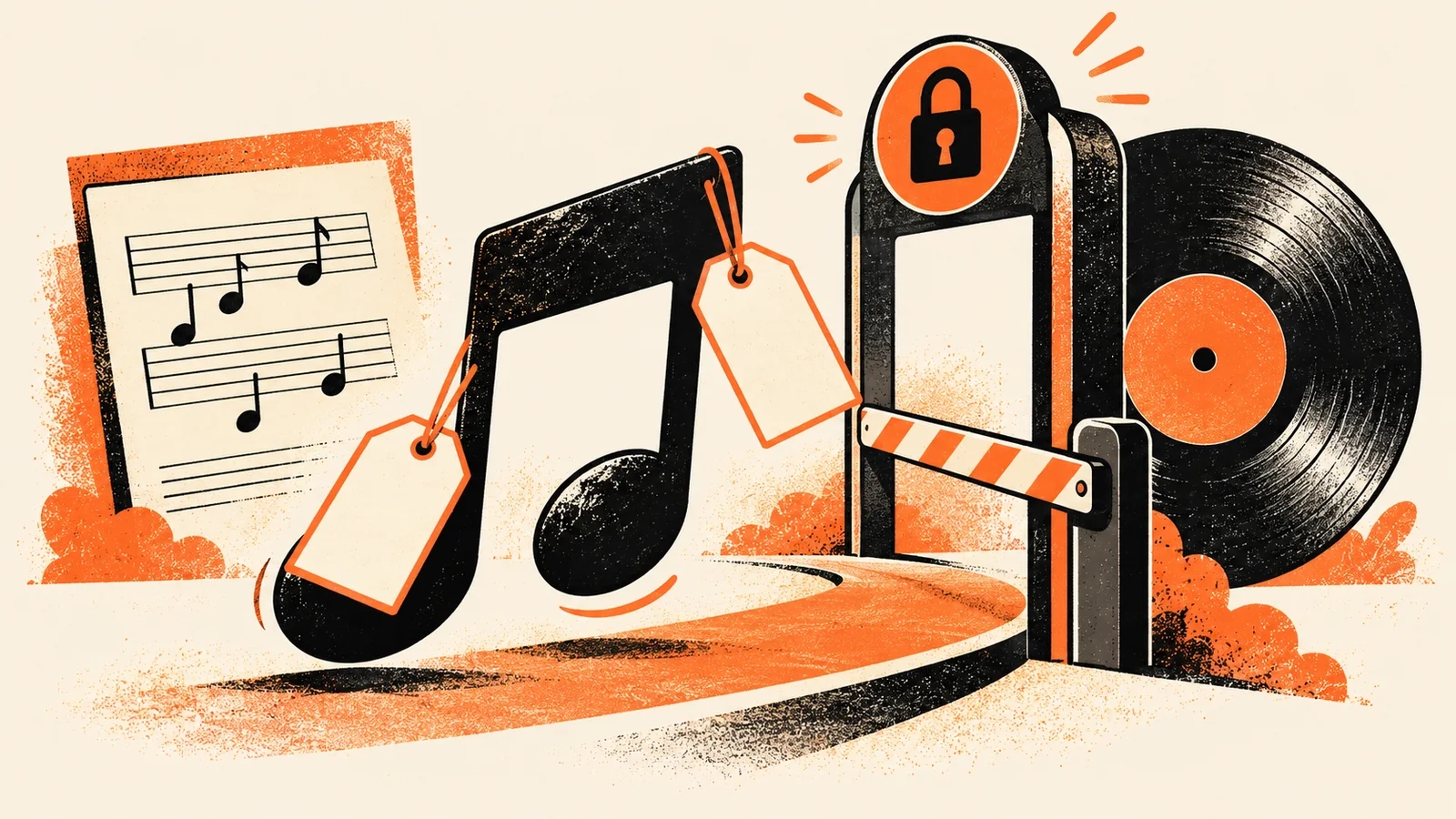
The U.S. Copyright Office explains that a musical composition and a sound recording are separate works. Licensing a recording does not automatically prove that the underlying composition is cleared, and clearing a composition does not automatically clear a particular performance. Ask for evidence that the licensor controls or has permission for the rights your use requires.
The nine questions
1. Which exact recording and composition does this permission cover?
Identify the precise audio file, version, edit, mix, performance, and underlying song. Confirm the artist, writers, publisher, label or master owner, and any alternate versions that might be delivered. A preview, cover, instrumental, sample, stem, remix, or “sound-alike” may involve different rights from the advertised track.
Ask whether the licence covers both the master recording and the composition, or whether you need separate permissions. The Copyright Office’s Circular 56A describes these as distinct works with distinct owners and rights. Save identifiers and a copy of the file you actually received so an editor cannot accidentally substitute a different recording under the same title.
2. Who is authorised to grant the permission?
Ask what chain connects the person or service selling the licence to the rights holders. Is the licensor the composer, publisher, label, performer, library, administrator, or an authorised representative? If a catalogue relies on contributors or samples, ask whether those upstream permissions are included and whether evidence can be supplied if a claim arrives.
Do not treat a marketplace badge, a “free” label, or the fact that other creators used a track as proof of authority. YouTube notes that content found online may still be controlled by its creator, and that permission must cover commercial use where monetisation is intended. Keep the answer, licence ID, receipt, and support contact with the project.
3. What media and platforms are included?
List every intended use: a creator’s channel, Instagram Reel, TikTok post, YouTube Short, podcast, website, client channel, paid advertisement, broadcast, internal presentation, event screen, or downloadable product. Ask whether the permission covers synchronisation with video, public performance, on-demand streaming, social upload, paid media, and future platform additions.
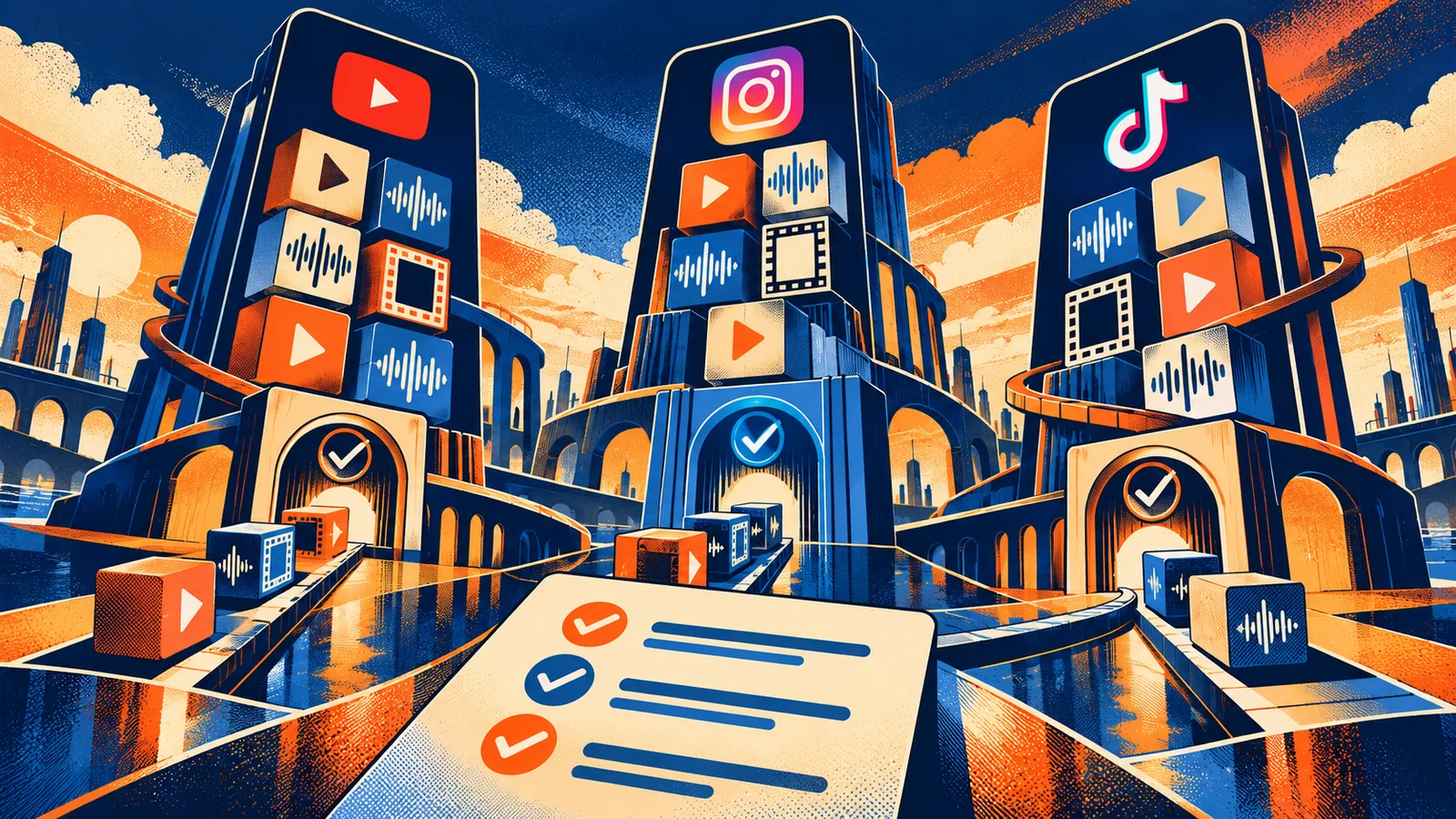
Platform-provided music is not automatically portable. Instagram says its licensed music library is intended for personal, non-commercial use and that access can vary by account, post type, and region. TikTok recommends its Commercial Music Library for posts promoting a brand, product, or service because licences outside it may not cover commercial use. A track selected inside one app may therefore be unsuitable for an exported master or another platform.
4. Which territories and languages are covered?
Ask for the allowed countries and regions, not merely “worldwide” in a marketing headline. Confirm whether the permission includes territories where the audience may view a repost, an embedded player, a paid campaign, or a client’s international account. Check language versions, translated lyrics, dubbed edits, and geo-targeted advertising if they are plausible future uses.
Document exclusions and what happens when a platform detects a territorial restriction. A video that is clear in one country can be muted, blocked, or claimed in another. If the campaign may expand, price or negotiate that use before publishing rather than assuming a later upgrade is automatic.
5. What is the term, and what happens after it expires?
Record the start date, end date, renewal process, grace period, and consequences of expiry. Ask whether existing published videos may remain online, whether paid promotion must stop, and whether new edits, compilations, or re-uploads after expiry are prohibited. “Perpetual” should still be read with its termination and breach clauses.
Set a calendar reminder before the term ends. If the music is embedded in evergreen videos, maintain a list of affected URLs and masters so you can replace the track, pause promotion, or document the continuing permission. Do not delete the licence record after publication; it may be needed to explain an old use or respond to a claim.
6. Does the permission cover monetisation, sponsorship, and paid advertising?
State whether the video will earn platform revenue, contain an affiliate link, feature a sponsor, promote a client, or run as an advertisement. Ask whether the licence permits brand endorsement, boosted posts, whitelisting, partnership ads, client-owned media, and use in a campaign created by an agency. “Organic social” and “paid social” are often separate permissions.
YouTube’s Creator Music documentation gives a concrete warning: individual track terms control usage, some tracks have commercial restrictions, and Creator Music tracks may not be allowed in videos primarily dedicated to promoting a paid brand. YouTube also requires the necessary commercial rights for monetised content. Read the track-specific terms rather than generalising from the existence of a library.
7. May you edit, loop, shorten, translate, remix, or generate variations?
List the intended edits: trimming, looping, fading, ducking under speech, changing speed or pitch, stems, instrumental versions, synchronising to cuts, translating lyrics, and creating alternate language or vertical versions. Ask whether derivative edits are allowed and whether attribution or approval is required for them.
Some platform licences are narrower than creators expect. YouTube’s Creator Music restrictions prohibit fundamentally altering a licensed track, creating new lyrics or translating lyrics, and distributing the music separately. A permission to synchronise an unchanged track does not automatically permit a remix, a lyric video, or a standalone download.
If AI tools will separate stems, extend an ending, generate a variation, clone a voice, or adapt the music to a new prompt, ask explicitly whether that workflow is allowed and who owns the resulting output. The U.S. Copyright Office’s AI initiative treats copyrightability and training as evolving policy issues; do not infer a licence or ownership answer from an AI tool’s marketing copy.
8. What attribution, metadata, and platform-claim steps are required?
Ask for the exact credit text, placement, link, writer information, ISRC or other identifier, and whether attribution must appear in the video, description, end card, or client report. Confirm whether omitting a credit can terminate the permission or simply breach a separate condition.
Ask how the licensor handles Content ID or platform matches. YouTube explains that Content ID can identify music and apply a claim even when a creator believes a track is safe. A licence may require you to register a channel, submit a whitelist request, add a reference number, or dispute a claim with proof of purchase. Save the escalation address and expected evidence. A Content ID match is a platform event to resolve, not proof by itself that your licence is invalid.
9. What are the cancellation, takedown, indemnity, and client-handoff terms?
Ask what happens if the licensor loses a right, a track is withdrawn, a platform changes its policy, a claim is disputed, or the client cancels the campaign. Can you substitute the track? Are previously published versions protected? Is there a refund, replacement, takedown duty, or notice period? What responsibility does the licensor accept, and what responsibility remains with you?
For client work, specify who buys the licence, who may use the music after delivery, whether the client receives a copy of the terms, and whether the licence follows the client’s account or only the creator’s account. Keep a clean alternate export without the track if a replacement becomes necessary. Do not promise a client that “licensed” means claim-proof, perpetual, worldwide, or transferable unless the signed terms say so.
Turn answers into a release decision
Mark each answer as confirmed, restricted, missing, or not applicable. “Missing” means pause, not “probably included.” Compare the requested use with the narrowest term in the licence: a campaign can be worldwide but still fail because the paid-media term is absent; a perpetual licence can still prohibit remixing; a platform clearance can still be personal-use only.
Before publishing, a second person should be able to open the rights record and answer what was licensed, for whom, where, until when, and under what conditions. Attach the final video filename, platform URLs, client approval, credit text, and claim correspondence. If the scope changes, create a new review rather than editing history out of the record.
Sources and scope
- U.S. Copyright Office — Musical Compositions and Sound Recordings, Circular 56A — official distinction between composition and sound recording rights; accessed 2026-09-15.
- Instagram Help Center — Access to the licensed music library — official personal/non-commercial library and Sound Collection guidance; accessed 2026-09-15.
- TikTok Support — Commercial use of music — official commercial-music guidance; accessed 2026-09-15.
- YouTube Help — Creator Music eligibility and restrictions — official licence, commercial, editing, and usage restrictions; accessed 2026-09-15.
- YouTube Help — Copyright on YouTube — official permission and commercial-rights guidance; accessed 2026-09-15.
- YouTube Help — Tips to find safe music — official Content ID and licence-scope caveats; accessed 2026-09-15.
- U.S. Copyright Office — Copyright and Artificial Intelligence — official evolving AI copyright policy materials; accessed 2026-09-15.
The nine-question framework is Angry Media editorial synthesis. Rights, licences, platform policies, AI terms, territorial rules, and client contracts vary by jurisdiction, service, account, version, and track. This article is educational, not legal advice; consult a qualified rights professional for a material or disputed use. Source review completed 2026-09-15; scheduled publication 2026-11-10.